
Do I need a permit to build a swimming pool in the Valencian Community in Spain?
A private pool in the garden in Spain offers a unique opportunity to fully enjoy life. In this sun-drenched country, there are many advantages to having a pool right outside your door.
Firstly, it provides refreshing relief during the hot summer months. You can take a dip in the refreshing water at any time and escape the scorching heat of the Spanish summer. No more long trips to crowded beaches or public pools.
A private pool is also a place of relaxation and enjoyment. It’s a space where you can escape the daily stress and let your thoughts quiet down.
Lastly, it significantly increases the value of your property. If you wish to sell your property in the future, a private pool is considered a luxury feature that enhances its value and attracts potential buyers.
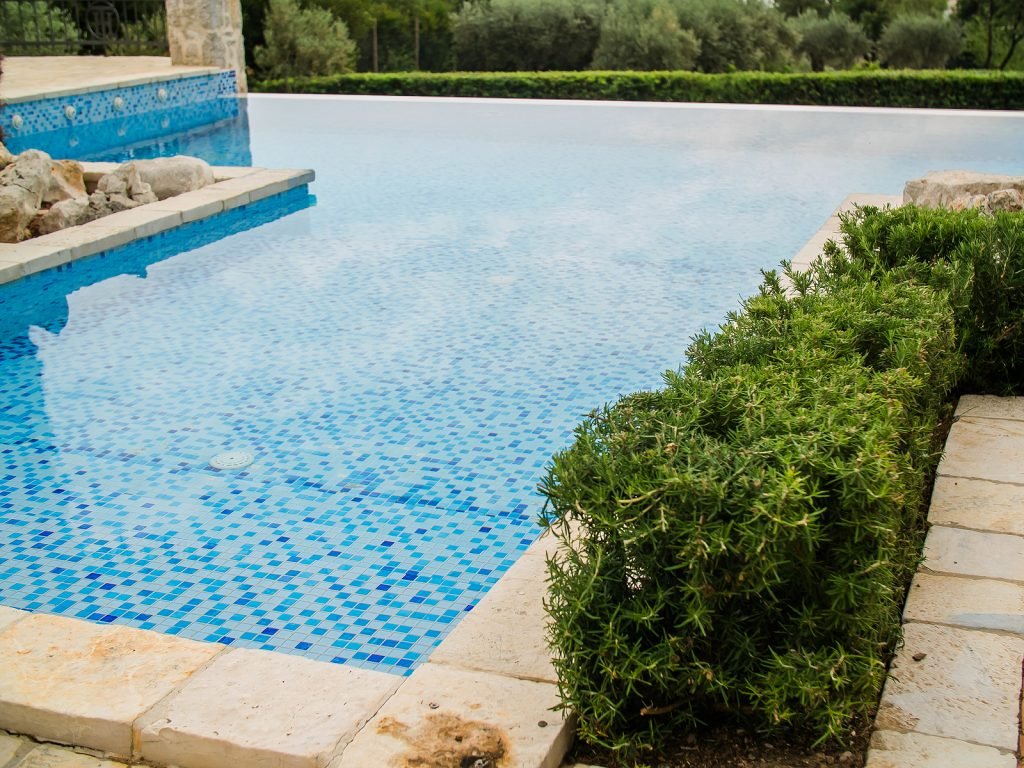
© Satura – Bigstockphoto
Is it Possible to Build a Pool at Home?
Yes, it is possible, but constructing a pool on your property requires obtaining a permit. The issuance of these permits or licenses generally falls under the jurisdiction of the Town Hall. Therefore, before contacting a pool construction company in the Valencian Community, it is essential to follow certain steps.
Firstly, you must verify if it is feasible to build the pool without infringing on your property’s boundaries. It is also necessary to request a report from the Town Hall that assesses the urban conditions and determines the viability of the project.
It’s important to note that if your property is not properly legalized or regularized, the permit may not be granted. In this case, you need to regularize your property’s situation before commencing construction.
Procedure and Requirements for Pool Construction
What procedures do you need to carry out to build a pool on your property?
Here, we will provide you with some tips to follow the right steps. Firstly, you need to apply for a technical project, for which you’ll require the assistance of an architect. Once you have the technical project, the next step is to submit it to your Town Hall.
However, we recommend that during the preparation of the technical project, you consult with your Town Hall to understand the specific requirements your pool must meet. This will depend on your garden’s size, location, and the specific requirements of each Town Hall.
Once the permit for pool construction is approved, you’ll also need to obtain a license to occupy public land and a waste management license. This is because debris will need to be removed before installing the pool. With these steps completed, you will have fulfilled all the necessary procedures.
Who should apply for the permit?
The permit to build a pool must be applied for in all cases where you wish to install a pool on a property. The size of the project, the space it will occupy, or its location are not determining factors. The mentioned permits must always be processed; otherwise, you could face penalties.
Procedures and Authorizations for Pool Construction
For most construction projects, various licenses and permits are required, and pool construction is no exception. In this case, it’s the Town Hall where the construction will take place that grants these authorizations.
In accordance with current regulations and considering the type of land and specific pool characteristics, the project’s feasibility may vary. Each Town Hall has its own regulations, and factors such as construction limits or distances to adjacent homes can influence the project’s feasibility.
Depending on the type and size of the pool, you will need either a major construction license or a minor construction license. For minor construction pools, those with an area of less than 20 m² and a depth of up to one meter, you need to submit a site plan indicating the pool’s location, along with an estimated budget, to the Town Hall. The license cost will correspond to 4% of the total budget.
For major construction pools, you must submit a project that complies with current municipal regulations, and it must be endorsed by a technical professional. The license fee for a major construction pool usually represents approximately 6% of the total project cost.
In addition to the mentioned licenses, you will also need to apply for authorization to occupy public land with construction machinery and tools, as well as obtain a waste management license.
In summary, regardless of whether it is a major or minor construction pool, it is always necessary to obtain the necessary authorizations from the Town Hall. Requirements may vary depending on the project’s size and complexity, but obtaining the license is an essential step in all cases.
Requirements and Documentation for Pool Installation at Home
Obtaining a license is a fundamental step to allow pool construction companies in Valencia to carry out their work. To obtain this license, you must submit a technically approved project to the Town Hall, prepared by a competent technician.
Each Town Hall may have specific requirements for the type of license required for this type of project. However, the basic execution project must include the following elements:
- Descriptive report.
- Construction report.
- Structure and facilities calculations.
- Quality control plan.
- Geotechnical information on the terrain.
- Waste management study.
- Compliance with CTE (Technical Building Code).
- Health and safety study.
The Town Hall of your municipality will determine whether an ordinary license or a responsible declaration is required for pool installation. Therefore, it is essential to consult with the Town Hall to understand all the necessary procedures. Obligations include obtaining a license to occupy public land and waste management, among others.
Is it Necessary to Register the Pool in the Property Register?
Although not mandatory, it is recommended to register the pool in the Property Register, similar to houses, as this action gives the construction validity in front of third parties. To complete this registration, the submission of the public deed declaring the new construction, signed before a notary, is required.
Is it Necessary to Register the Pool in the Cadastre?
After finishing pool construction, there is a two-month period to register it with the General Directorate of Cadastre. To do this, it is necessary to complete form 902N, a document that declares the construction, expansion, reform, or rehabilitation of real estate. You can submit this form at the Cadastre offices, at the Town Hall of the municipality where the property is located, or at the corresponding Tax Office.
Always Verify the Pool Construction License When Buying a Property
It is common to find that when buying a house in Spain, the pool is not registered in the Property Register. Often, this is due to the seller’s lack of knowledge, who may not have been aware that a pool requires a construction license. For the buyer, this can have serious consequences. An unauthorized pool can result in fines and even a demolition order. According to a judgment of the Supreme Court of Spain in 2001, a pool measuring 4 m x 7 m x 1.5 m requires a “major construction license,” which must be prepared by an architect. Laws have evolved since then, distinguishing between “major construction licenses” (major construction) and “minor construction licenses” (minor construction). Ultimately, each municipality in Spain has the authority to make decisions regarding this matter.
Does Pool Construction Impact IBI?
The construction of a pool affects the Property Tax (IBI) by increasing the cadastral value of the property, to a varying extent between 5% and 15%, depending on both the pool’s characteristics and the property itself. This means that the IBI payment after constructing a pool will increase within a range of 5% to 10% compared to what was paid previously.
Is VAT Applied to Pool Construction?
The construction of a pool, whether it is in a single-family home, an urbanization, or on a plot of land, is subject to VAT at a rate of 21%.
How is a Constructed Pool Legalized?
To legalize a pool that has already been constructed, you need to submit the technically approved project to the Cadastre or the Town Hall. If the pool complies with regulatory requirements, it will be considered legalized.
Notice
The content of this page and the detailed pages containing specific information have been created with the utmost care. However, this content is for informational purposes only and does not constitute legal or tax advice. For legal or tax questions, you should always consult a qualified expert such as a lawyer or tax advisor. We do not assume any responsibility for the legal validity of the information provided at any given time or at a later date.